
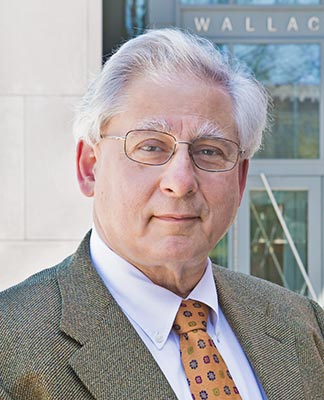
November, 2017.
Dr. Paul Joseph DiMaggio, Professor Emeritus, Princeton University, has joined the Institute for Advanced Study as the Princeton Foundation for Peace & Learning Founder’s Circle Member, beginning October 2017. Previously, Prof DiMaggio was Barton Hepburn Professor of Sociology and Public Affairs at
Princeton University.
Prof DiMaggio earned his Ph.D. in sociology from Harvard in 1979 and joined Yale where he served as the Executive Director of Yale’s program on nonprofit organizations and Chair of the Sociology department till 1992. Subsequently, he joined Princeton University where he continued till 2016 and founded the Center for the Study of Social Organization. During these years, he was a fellow at the Center for Advanced Study in the Behavioral Sciences (1984–85) and John Simon Guggenheim Memorial Foundation. He also served on the board of the National Assembly of State Arts Agencies and a member of the Executive Committee of the Center for Information Technology and Public Policy.
Prof DiMaggio’s early work on the development of arts institutions in Boston as well an initial analysis of how cultural capital determined life success, is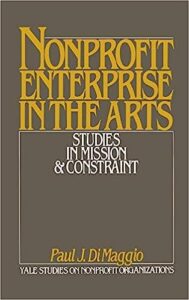
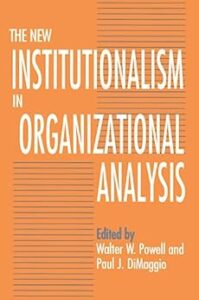
now considered classic in the field of sociology. Later, he focused on organizational behaviors which included a 1983 paper that has been one of the most cited in the social sciences (more than 34,000 citations by April, 2016). His seminal work “The New Institutionalism in Organizational Analysis (University of Chicago Press, 1991), contributed to the return of institutional concerns to a broad array of fields.
 During the 1990s, he began a series of projects on American public opinion, including important papers on polarization and the sociological basis for consumer choice. This work established him as one of the intellectual leaders on the role of the Internet in defining public knowledge and social stratification, and brought forth the issue of digital divide a decade before it made national news. Over the past few years, Prof DiMaggio has been a leading proponent of computational analysis in the study of cultural changes. His influence in sociology, however, cannot just be measured by scholarly output.
His students represent an “all-star team,” with appointments in University of Pennsylvania, Princeton, Duke, UCLA, Harvard, UC Berkeley, Stanford, etc. In addition, Paul has served on the American Sociological Association’s executive committee, council, and publications committee. His honors include a wide number of invited lectureships, grants, residential fellowships at the Center for Advanced Study in the Behavioral Sciences at Stanford and the Russell Sage Foundation, and memberships in the American Academy of Political and Social Science, and the American Academy of Arts and Sciences.
